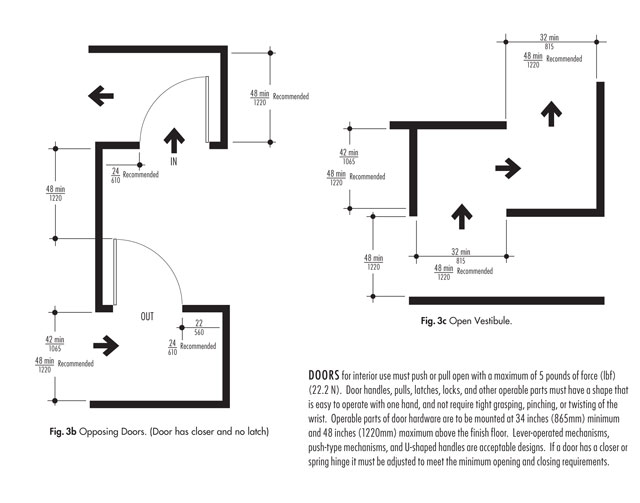
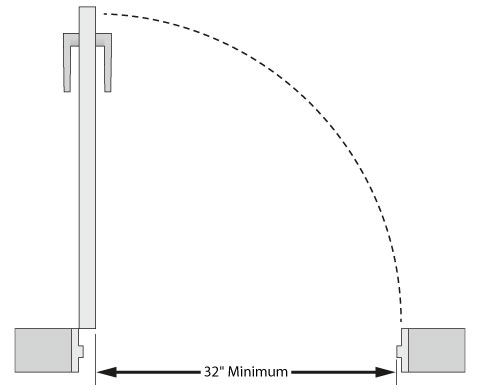
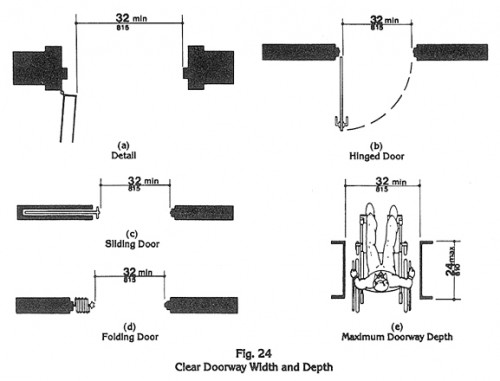
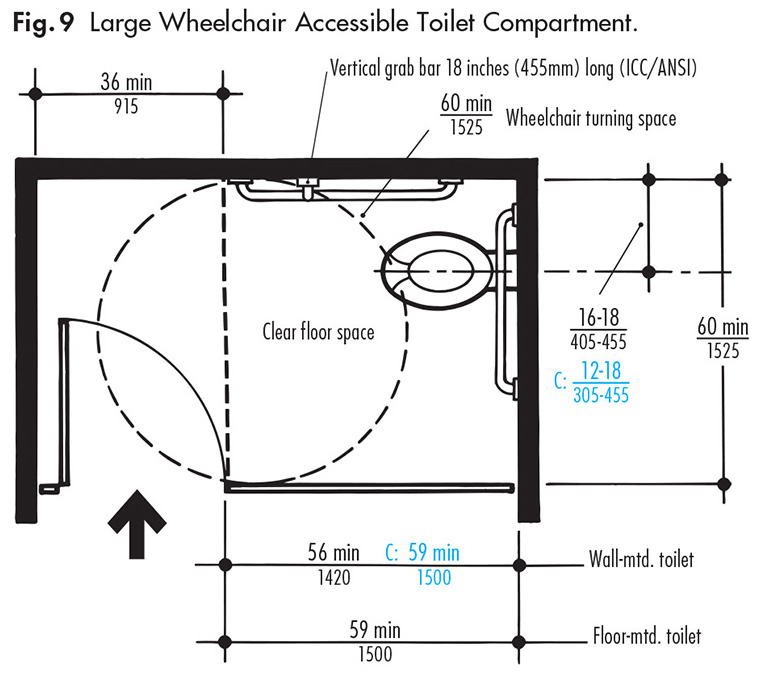
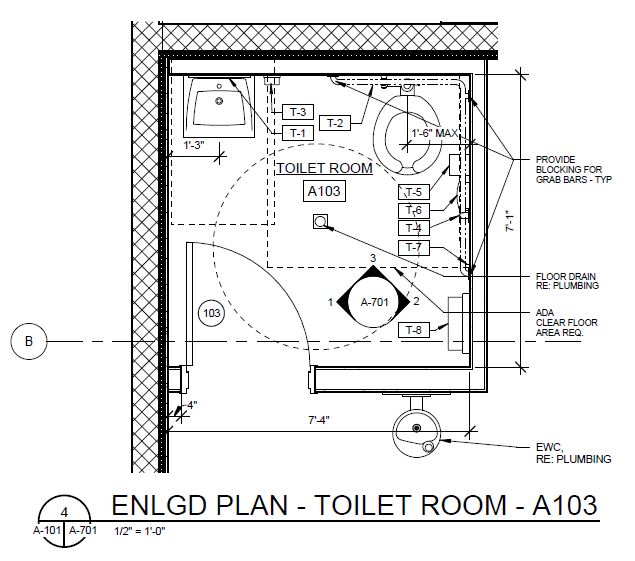
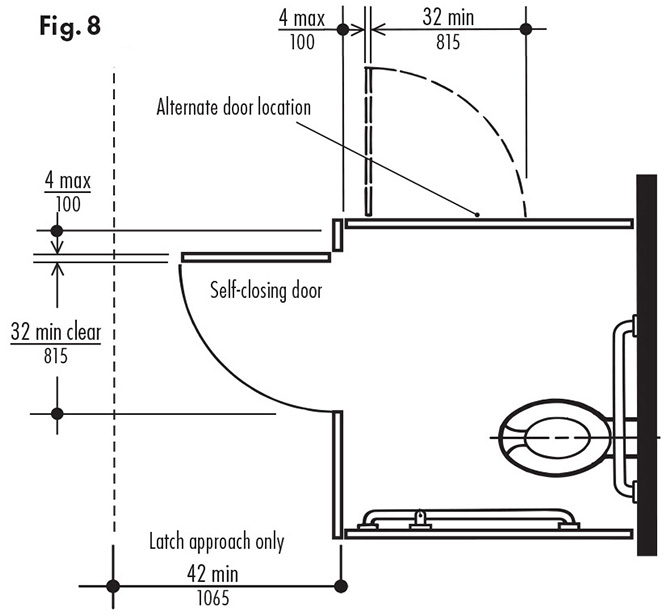
According to the 2010 law, ADA bathroom doors need to be at least 32 inches (81 cm) wide, while the swing of the door can interfere with the clear maneuvering area about 12 ⏯. Example Bathrooms The Standards do not directly specify the size of bathrooms which is determined by the layout, the type and number of fixtures, and other factors and design choices. How various requirements are met, including fixture clearances, turning space, and door maneuvering clearance will determine the minimum dimensions of the room.

In this guide, we'll break down standard bathroom door sizes, ADA-compliant options, and tips for choosing the best door for your space. Codes and Standards: What to Know Before starting a bathroom remodel, it's crucial to understand the building codes and design standards that ensure safety and functionality. Ensure your doorways meet ADA specifications with ADA.
ADA Requirements for Doors: Standards and Compliance
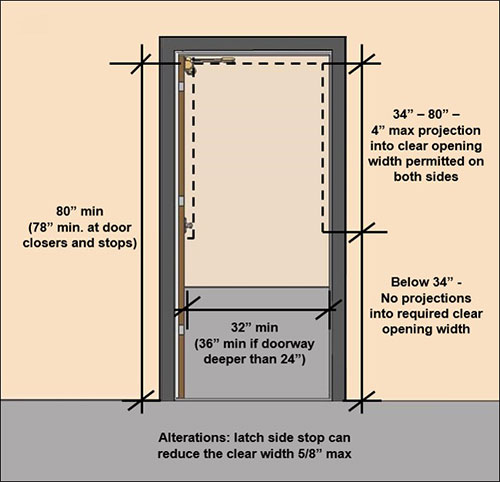
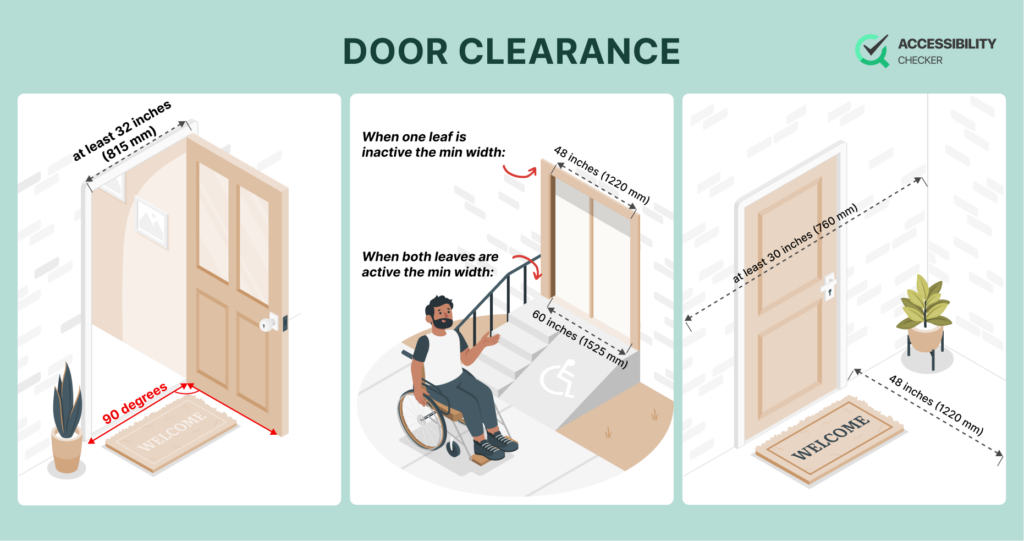
To meet ADA requirements, doors to restrooms have to be at least 32" wide, measured when the door is open to 90 degrees. If the doorway opening is more than 2' deep, that minimum width increases to 36". Door Opening and Closing Requirements Door and Gate Opening Force In addition to section 309.4, another section speaks of the amount of force when opening doors and gates.
Section 404.2.9 covers two types of doors. The ADA says, "1. Interior hinged doors and gates: 5 pounds (22.2 N) maximum.

Fascinating 50+ Bathroom Doors Dimensions Decorating Design Of Ada ...
Sliding or folding doors: 5 pounds (22.2 N) maximum.". All TruStile doors can be manufactured to meet ADA door requirements and guidelines including minimum door opening width, height, and closing speed.. Even in restrooms, all doors and hardware should meet the minimum ADA requirements for door openings.

Space Requirements To accommodate users with mobility aids, all restroom hallways, aisles, and other passageways must be 41.