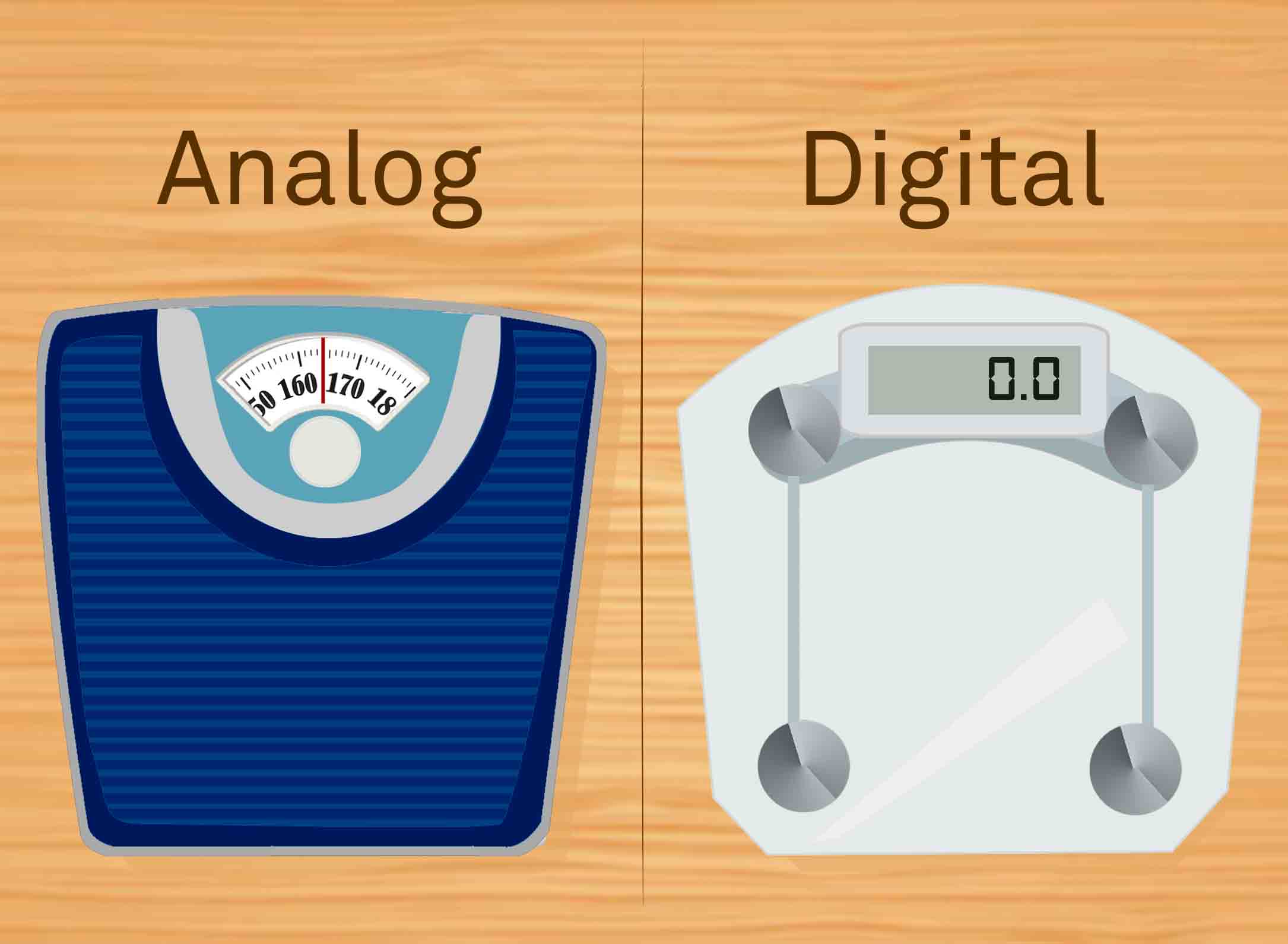
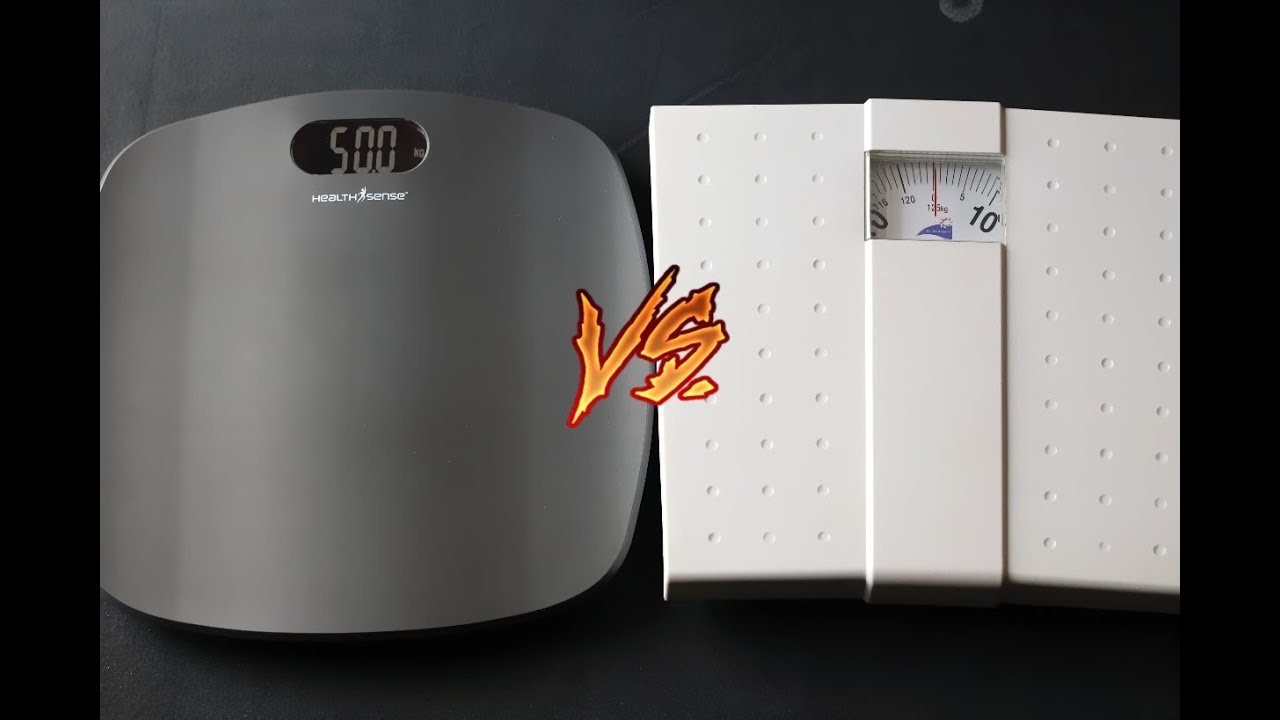
According to Julie Devinsky, a clinical dietician at Mount Sinai Hospital, digital scales tend to be more accurate, for a number of reasons. For one, analog scales' springs might suffer from. Wondering if digital scales are more accurate? Compare them with analog models and find out which one suits your weight goals best.

Discover the differences between digital and analog weighing scales & machines, their accuracy levels, features, and tips on choosing the right one for your needs. Analog scales, on the other hand, are often less expensive and last longer (compared to equally-basic digital scales, not higher-end ones that can be calibrated). Analog is the way to go if you want a scale that is mostly accurate, economical, and will last for the next 20 years.

Top Differences Between Digital and Analogue Weight Machine
So, are analog or digital scales more accurate? Digital scales use strain gauges or load cells to measure weight, while analog scales use a mechanical spring or balance beam. Digital scales are typically more accurate and precise than analog scales, but they are also more expensive. However, many modern digital scales are energy-efficient and come with automatic shut-off features.

Conclusion Both digital and analog weighing scales serve essential roles in daily life, and each offers unique advantages. Choose an analog scale if you prefer a simple, cost-effective, and durable solution without the need for advanced features. Here's a quick overview to help you in making a choice: Buy a Digital Scale if: Precision is Key: Digital scales offer more accurate and consistent measurements than analogue scales.

Digital vs. Analog Weight Scales & Machines: Which is Accurate - E. G ...
User-Friendly: They show readings clearly on a screen, which is especially helpful for those with vision challenges. In the world of weighing scales, the debate between digital and analog models continues to spark discussion among consumers, fitness enthusiasts, and professionals alike. While both types serve the same fundamental purpose-measuring weight-their mechanisms, accuracy, and suitability for specific tasks differ significantly.

One study from 2013, testing 61 home scales, found that analog dial scales were typically less accurate, but without a clear explanation for why. The researchers suggest that digital scales may be more accurate due to having fewer moving parts that could go out of alignment or become damaged. Because of this, the analog scales are more durable and long.